
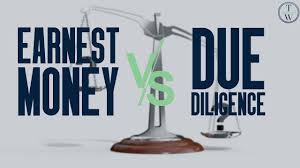
What is Due Diligence Fee and Earnest Money Deposit?
As you read through the information below you can see how quickly it becomes confusing when you are buying of a home. Read my message at the bottom to learn how I can guide you through the process and help you achieve your real estate goals!
DUE DILIGENCE FEE
Below are just some important Questions and Answers on: Due Diligence for Residential Buyers from the North Carolina Real Estate Commission website. To download their Due Diligence Q&A brochure click HERE.
Q: What is Due Diligence?
A: Due Diligence” is the buyer’s opportunity to engage in a process of further investigation of the property and the transaction as described in the Offer to Purchase form within a period of time agreed to by the seller and buyer.
Q: What might the buyer investigate during “Due Diligence”?
A: The buyer will want to inquire about anything bearing on a decision to either move forward with the contract or to terminate it. Paragraph 4 of Form 2-T outlines many, but not all, common considerations of the “Due Diligence” process such as home, pest, and septic inspections, property survey, appraisal, title search, loan qualification and application, repair negotiation, etc.
Q: How much time is allowed for the “Due Diligence” Process?
A: The amount of time is negotiable but the period begins with the effective date of the contract. Paragraph 1(j) of Form 2-T will state the period’s agreed upon ending date. Buyers should be certain to negotiate enough time to fully complete their inquiries – especially as related to appraisal and loan approval and any repairs discovered during property inspections.
Q: What is the “Due Diligence” Fee?
A: The fee, if any, is negotiated and paid by the buyer to the seller for the right to conduct “Due Diligence”. The amount of the fee may be influenced by such matters as the market for the property, number of days on the market, personal circumstances of buyer and seller, and the length of the “Due Diligence” period.
Q: Is there a limit to the repair items the buyer can ask the seller to perform?
A: No. The buyer is free to ask for any number of things; however, the seller is not obligated to agree to any of them. Repairs, if any, are completely negotiable.
__________________________________________________________________________________________________________________
EARNEST MONEY DEPOSIT
Below are just some important Questions and Answers on: Earnest Money for Residential Buyers from the North Carolina Real Estate Commission website. To download their Earnest Money Deposit Q&A brochure click HERE.
Q: What is “earnest money?”
A: It is money you give to the seller (or the seller’s agent) to show your good faith when making an offer to purchase the seller’s property.
Q: Do I have to pay an earnest money deposit to have a valid contract?
A: Although no law requires it, sellers typically do require it. If you agree to pay earnest money but do not make the required payment or your earnest money check “bounces,” you will probably be considered in breach of the contract.
Q: How much earnest money should I pay?
A: The amount is negotiated between you and the seller. It is typically a small percentage of the purchase price and can vary depending upon local market conditions, the price of the property, the type of property (e.g. vacant land, existing housing, or new construction), whether cash advances to a builder or seller are involved, and other factors
Q: Is earnest money the same as a due diligence fee?
A: No. The “due diligence fee” is a separate, nonrefundable fee a buyer may pay for a negotiated period of time (the “due diligence period”) during which the buyer may perform inspections, obtain loan approval, schedule a property survey or appraisal, review restrictive covenants, and determine whether or not to proceed with the purchase. The due diligence fee is paid directly to the seller under the standard Offer to Purchase and Contract. Before the end of the due diligence period, the buyer has the right to terminate the contract for any reason or no reason at all, while the seller remains bound by the terms of the contract. Buyers typically want to negotiate the lowest due diligence fee for the longest due diligence period, while sellers want to negotiate the highest fee for the shortest period. Regardless, just like the earnest money deposit, no due diligence fee is required by law. If a buyer wants the seller to make repairs, the buyer should have the parties enter into a signed, written agreement before the expiration of the due diligence period to have the specific repairs completed. While the due diligence fee is non-refundable, except in the event a seller breaches the contract, the due diligence fee is typically credited to the buyer at closing.
An important message from Jacqueline Donovan, Broker-in-Charge & Owner for Carolina Life Realty LLC.
Buying a home can quickly become overwhelming, but that’s where having a knowledgeable and experienced real estate agent makes all the difference. As your dedicated agent, I’ll guide you through every step of the process, from understanding contracts to negotiating with sellers and working alongside attorneys—all while representing your best interests.
Here’s the best part: as a buyer, you don’t pay a fee for my services. With over 20 years of experience as a real estate agent, 10 years as a paralegal specializing in real estate closings, and extensive expertise in the RTP and Greater Raleigh areas as a native North Carolinian, I bring unmatched knowledge and dedication to help you find the perfect home. Let me put my experience to work for you—reach out today to get started!
Learn more about me and how I can help you with your real estate needs by visiting my bio here: Jacqueline Donovan or Contact Me through a simple form. Let’s work together to find your dream home or sell your property with confidence!